

Why Music Artist Branding Isn’t About Your Logo
By Discovery Music Group
(9 minute read)
Your logo isn't your brand. Your superfan pipeline is. Most artists spend weeks debating font choices and color palettes while 106,000 other tracks hit streaming platforms that same day. The visual stuff matters at the margins. What actually determines whether an artist survives or disappears is whether strangers become paying fans, and whether paying fans become obsessed ones.
This post isn't anti-aesthetic. A consistent visual identity still has a role. But the 2025 and 2026 data makes a specific argument that most music marketing advice hasn't caught up with yet: the artists who are winning aren't winning because they look good. They're winning because they've built a system that converts casual listeners into superfans who spend $113 a month on live events alone. Understanding the difference between surface-level branding and a genuine fan conversion strategy is what separates artists who grow from artists who plateau.
Key Takeaways
- 88% of all music tracks generated fewer than 1,000 streams in 2025, making the market more competitive than ever (Luminate 2025 Year-End Report).
- Superfans spend $113/month on live events, 55% more than the average listener, and buy merchandise at nearly three times the rate.
- The fastest-growing music revenue category in 2025 was expanded rights (merch, live shows, brand deals) at +21.5%, outpacing streaming's +7.7% (MIDiA Research, 2026).
- Visual branding is a door. A superfan conversion system is the whole house.
Why Does Music Branding Advice Keep Failing Independent Artists?
The global recorded music market grew 9.4% in 2025 (MIDiA Research, 2026), yet most independent artists still receive a branding playbook built for the CD era. Conventional artist branding advice isn't wrong. It's incomplete for today's market. The standard playbook, built on decades of major-label marketing logic, correctly identifies that visual consistency creates recognition. When fans see your color palette or logo on a thumbnail, they know it's you before reading a word. That recognition has real value.
The traditional approach covers three areas: a defined visual identity (logo, fonts, brand colors), a consistent aesthetic across social media profiles, and a cohesive artist persona that ties the visuals to a personality. This framework made complete sense in the CD era, when shelf presence in record stores was a genuine conversion mechanism. Looking distinctive on a rack of 200 albums could move units. It translated reasonably well into early streaming too. Spotify playlist cover art, YouTube thumbnails, and Instagram grids all reward visual consistency.
So where does it break down? It stops at the click. The conventional branding playbook has no plan for converting a listener into someone who'll buy a ticket, a t-shirt, or a limited vinyl pressing. It was built for discovery. It was never designed as a retention or conversion system. And in a market where discovery is no longer the hard part, that gap is becoming very expensive to ignore.
Why Visual Branding Alone Won't Save You (106,000 Uploads a Day)
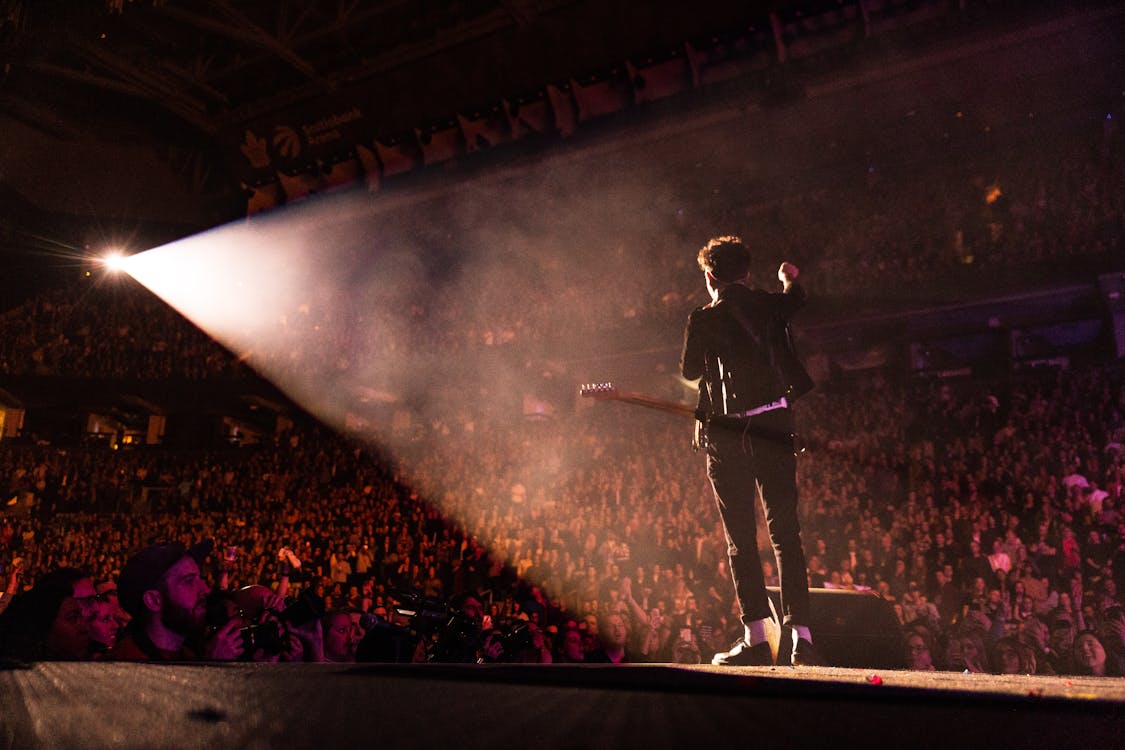
The numbers are stark. According to the Luminate 2025 Year-End Report via Music Business Worldwide, 106,000 new tracks are uploaded to streaming platforms every single day. At that volume, aesthetic differentiation is nearly impossible. A beautiful logo doesn't move the needle on discoverability when the competition is measured in six figures per day.
The deeper statistic is even harder to sit with. In 2025, 88% of all tracks generated fewer than 1,000 streams, yet just 0.2% of tracks accounted for 49.4% of all global streaming consumption (Luminate 2025 Year-End Report). The market isn't just crowded. It's winner-take-almost-all. Visual polish alone won't move an artist from the 88% into the 0.2%. What does? Connection depth. And that comes from a brand strategy built around fan conversion, not aesthetic approval.
For artists already releasing music consistently, it's worth considering whether Discovery Music Group's playlist pitching service is working alongside your brand strategy. Placement on curated playlists only pays off long-term if listeners have a reason to follow and stay once they've found you.
Industry insight: Visual branding generates clicks. Fan identity generates revenue. Artists who consistently break through combine platform mechanics, deliberate community building, and a clear emotional position. These are elements of brand strategy that go well beyond logo and color palette. (Luminate, 2025)
What Does the 2025 Luminate Data Show About Which Artists Win?

The Luminate data doesn't just describe the problem. It describes the solution, in dollar terms. Superfans make up just 20% of U.S. music listeners, but they spend $113 per month on live events alone, 55% more than the average listener. And 73% of superfans buy physical merchandise, compared to just 26% of general listeners (Luminate 2025, via music3point0).
That gap is the whole argument. A single superfan is worth roughly three average listeners in direct revenue. Converting 100 casual listeners into superfans isn't just a branding win. It's a financial restructuring of your revenue base. It requires a specific kind of branding: one built around emotional connection, exclusive access, and identity alignment, not just visual consistency.
A Vevo study via Music Business Worldwide (2025) reinforces this from a different angle: 89% of music fans say their fandom is central to their personal identity, and 60% are more likely to spend with brands that align with their favorite artist. Your superfans are an audience that brand partners want access to. Your brand is a business asset, not just a marketing tool.
Industry insight: Brand deals and expanded rights (artists' share of merchandise, live revenue, and brand partnerships) grew 21.5% in 2025, nearly three times faster than streaming's 7.7% growth. The fastest-growing revenue categories in music are all downstream of superfan relationships, not raw stream counts. (MIDiA Research, 2026)
Think of Your Brand as a Superfan Conversion System
The global artist merchandise market is forecast to reach $16.3 billion by 2030 (MIDiA Research, 2025), a market built almost entirely on fan identity, not visual aesthetics. Reframing your brand as a conversion system changes what you work on. Instead of asking "does this look consistent?", you ask "does this move people closer to obsession?"
Here's what a superfan conversion system looks like in practice:
- Stranger → Listener: Discovery. TikTok is now the dominant mechanism. 8 of 10 Billboard No. 1s in 2025 had a viral TikTok moment before charting (TikTok/Luminate Music Impact Report, 2025). Your brand at this stage is a hook, not a logo.
- Listener → Fan: Repeated, emotionally resonant contact. Showing people who you are, not just what you look like. Discovery Music Group's website development service builds the owned central hub where this deeper conversion happens: a professional space where listeners can explore your full story, join your mailing list, and buy direct.
- Fan → Superfan: Where the real economics unlock. Superfans want exclusive access, limited product, and a sense of genuine relationship. Your brand has to make them feel like insiders.
- Superfan → Advocate: When fans do your marketing for you. U.S. TikTok users are nearly twice as likely to be music superfans as the general population (27% vs. 15%) and spend 46% more on music each month (TikTok/Luminate, 2025). Advocates create the discovery loop that feeds the top of your funnel.
For a detailed look at how influencer partnerships drive the discovery-to-fan stage of this funnel, the influencer marketing for musicians guide is worth reading alongside this one.
Ready to build an artist brand that converts? Discovery Music Group's artist website development service creates professional online homes designed to turn first-time visitors into lifelong fans, built around your identity, not a generic template.
How Do You Start Repositioning Your Brand This Week?

You don't need to scrap your visual identity. You need to add a conversion layer to it. More than one-third of artists earning $10,000 or more on Spotify in 2025 were self-releasing DIY artists (Spotify Loud & Clear 2026). They're not winning on aesthetics. They're winning on systems.
- Map your current funnel. Write down every touchpoint where a stranger could become a fan: a TikTok video, a Spotify follow, an Instagram story. Then ask honestly which of these have a next step. If someone streams your track, where do they go? If you don't have an answer, that's your first priority.
- Build an owned home base. Social media platforms own your audience. An algorithm change or account suspension can erase years of work overnight. Your website is the only digital asset you fully control. Most independent artists underinvest here and pay the price when platforms shift. Discovery Music Group's website development service builds artist websites specifically designed for fan conversion, not just portfolio pages, giving you a professional, permanent home that no platform can take away. For more on what a dedicated website delivers at each stage of fan growth, see our guide to why musicians need their own website.
- Get your story in front of new audiences. Editorial coverage (features on music blogs and online publications) carries credibility that self-promotion on social media simply can't match. Readers who discover an artist through a trusted editorial source are more likely to follow and engage. Discovery Music Group's blog promotion service pitches your music to established editorial outlets, securing the kind of third-party credibility that accelerates the listener-to-fan conversion at scale.
- Define your superfan tier. What can you offer that general fans can't access? Presale tickets, handwritten notes, limited merch drops, or a private listening session are all viable regardless of audience size. Discovery Music Group's influencer marketing service can accelerate this stage by putting your identity content in front of aligned, highly engaged audiences already primed to become superfans.
- Track conversion, not just reach. Engagement rate, email sign-ups per release, and merch conversion rate are better brand health metrics than follower counts. Superfans buy merch at 73% vs. 26% for general listeners. If your rate is closer to the lower figure, your brand isn't yet building superfans.
Who Is This Approach Actually For?
This framework works best for artists at the growth stage: someone who has already released music, built some audience, and wants to convert casual attention into lasting revenue. It's worth being honest about that.
If you're releasing your first few tracks, visual basics still matter. A coherent profile photo, consistent handle across platforms, and a readable artist name are genuine table stakes. Ignoring them creates friction. The independent music market held 46.7% of global market share in 2024 at $14.3 billion in revenues (MIDiA Research via Hypebot). That market is competitive enough that sloppy presentation costs you real opportunities.
The argument here isn't "aesthetics don't matter." It's that aesthetics without a conversion architecture don't produce sustainable careers. For major-label artists with full marketing teams, the two aren't in conflict. For independent artists choosing where to spend limited time and money, the conversion system should rank higher than the mood board.
Frequently Asked Questions
But doesn't a strong visual brand help with getting noticed in the first place?
Yes, to a point. A consistent visual identity improves click-through rates on thumbnails and playlist placements. But with 106,000 tracks uploaded every single day (Luminate, 2025), visual differentiation alone isn't sufficient for discovery at scale. It's a necessary baseline, not a growth engine. Discovery at scale now runs through platform algorithms and community sharing, both of which respond to engagement depth, not logo quality.
What if I'm just starting out: should I focus on brand before the music?
Music first, always. A brand without music to attach to is just a style guide. That said, even early-stage artists benefit from deciding one thing upfront: what feeling do you want people to walk away with? That single decision shapes your content, your visual choices, and eventually your superfan pitch. The visual identity can be simple. The emotional positioning needs to be clear from the start, and Discovery Music Group's website development service can build a professional artist home that reflects that identity from release one, so the brand grows alongside the music.
How do I know if my branding is actually converting fans?
Track three metrics. First, your streaming-to-follow ratio: are people who hear you once actually following? Second, your email or direct-channel growth per release. Third, your merch conversion rate. Superfans buy merchandise at nearly three times the rate of general listeners (73% vs. 26%, Luminate 2025). If your rate sits near that lower figure, your current approach isn't building superfans yet. Discovery Music Group's influencer marketing service is designed to close exactly that gap, by putting your music in front of engaged audiences who are already predisposed to convert.
Does focusing on superfans mean I should ignore casual listeners?
No. Casual listeners are the raw material for superfans. The funnel starts with discovery. The point is to design your branding so the right people move deeper over time. According to Luminate 2025, superfans make up 20% of listeners but generate the majority of artist revenue through live events, merchandise, and repeat purchases. Reaching casual listeners matters. Converting them is the goal, and Discovery Music Group's influencer marketing service specialises in targeting audiences who are already engaged music fans, making them far more likely to move from first listen to active supporter.
How do I protect my artist name and brand identity across platforms?
Securing your handle across every major platform (Spotify, Instagram, TikTok, YouTube, X, and SoundCloud) is one of the most practical first steps in artist branding. If another account claims your name first, you lose both discoverability and brand consistency, and recovering those handles is difficult. Discovery Music Group's username claims service can secure your artist identity across all major platforms quickly, before someone else does.
♩ More ways Discovery Music Group can help you grow
- Website Development: Professional artist websites built to convert visitors into fans
- Logo Design: A professional logo built around your artist identity
- Influencer Marketing: Promote your music via vetted TikTok, Instagram & YouTube creators
- Blog Promotion: Get your music featured on music blogs and editorial sites
- Username Claims: Secure your artist name across all major platforms
Conclusion
The logo debate isn't going away. Visual branding feels concrete and controllable, especially when everything else about a music career feels uncertain. But the data from 2025 and 2026 is consistent: artists building sustainable careers are building fan conversion systems, not refining press photos.
Streaming grew 7.7% in 2025. Expanded rights (the revenue tied directly to fan identity) grew 21.5%. Live Nation reported record sponsorship revenue of $1.2 billion in 2024 as artists endorsed nearly 2,000 unique brands (SponsorUnited, 2025). All of that downstream revenue flows from one source: fans who feel a genuine connection to who you are.
Get your visual identity to a workable standard. Then put the real hours into the system that turns listeners into people who'd cross a city to see you play. That's the brand that builds a career. For more on growing your presence as an independent artist, start with our guides on marketing tips for musicians and getting your music featured on music blogs, or explore our full range of artist services.